
Will AI Replace 3D Renderers? Here's What I Actually Think.
An honest look at what AI rendering tools can actually do, what they can't, and why that gap matters.
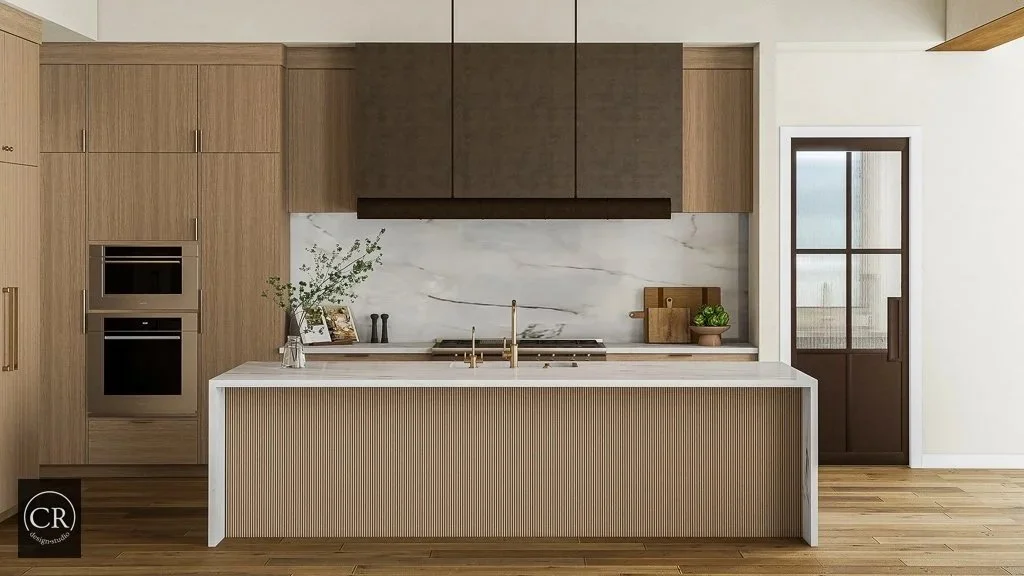
Design: Cori Richards Interior Design
I'm going to be straight with you: I've had this conversation with myself more than once. You've probably had it too, just about your own work. The tools keep getting better, the demos keep getting more impressive, and there are now entire courses built around teaching designers (and clients!) to generate their own renderings with AI. It's hard not to wonder where that leaves the rest of us.
I've watched what's happening in the industry. Platforms are shifting toward AI-based rendering workflows. New tools launch every few months. The conversation is everywhere.
Here's what I actually think, after sitting with it for a while.
AI is genuinely good at some of this. Let's not pretend otherwise.
Early concept exploration? Mood-setting visuals? Quickly generating a "does this direction feel right" image before you've committed to anything? AI tools are fast, they're cheap, and for that specific job, they work. I'm not going to tell you otherwise.
Virtual staging for empty rooms is another one. Upload a photo, furnish it digitally, and use it for marketing or early client conversations. For that use case, AI has genuinely changed the game. If that were the only thing I was offering, I'd be worried. But it's not.
Here's where it gets complicated.
When I'm building out a project, part of my process is verifying that everything actually works in the space. Not just visually. Spatially. And more than once, while modelling a layout, I've had to go back to the designer and flag that a piece of furniture they had specified would not realistically fit in the room. Sometimes it was a measurement issue in the layout. Sometimes the furniture dimensions were off. Either way, it was a problem that hadn't been caught yet and would have shown up later in the worst possible way.
The designers were grateful. Catching it at the rendering stage is a very different conversation than catching it at delivery.
AI generates a beautiful room. It cannot tell you that your sofa is six inches too wide for the space.
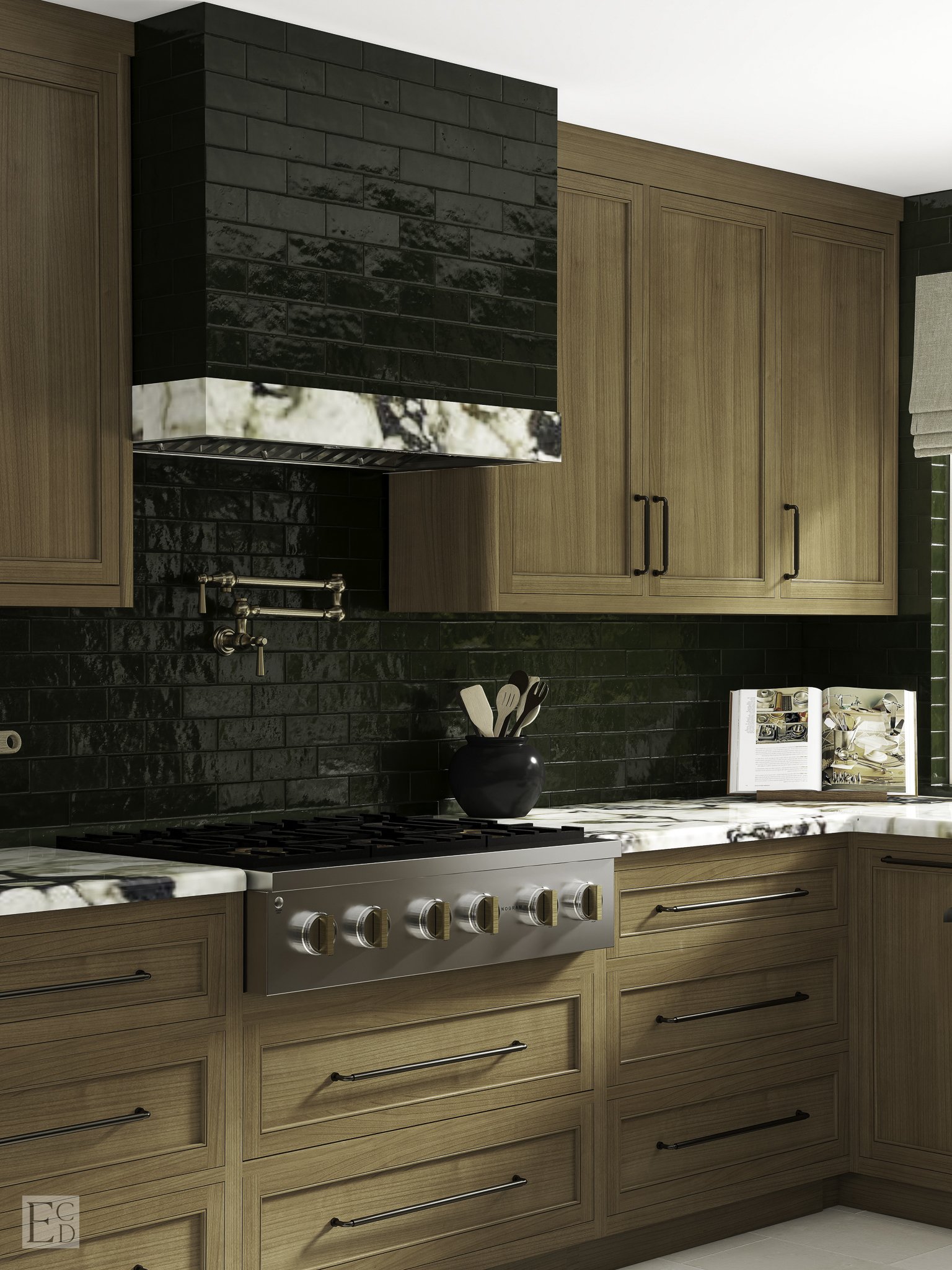
Design: Ethan Charles Design
That's not a knock on the technology. It's just what these tools are actually doing. They're generating a plausible-looking version of a space. They're not modelling it. They're not checking whether the dimensions add up. They're producing something that looks right, which is not the same thing as something that is right.
I wanted to see all of this firsthand, so I started testing. For visuals, I tried the popular ones like ChatGPT, Gemini, and Midjourney, to name a few. The results were hit-or-miss, and I'll be honest, a lot of that probably comes down to prompting, which is its own skill set. I've also tried using AI to generate 3D furniture models with not-so-great results. Nine times out of ten, I've ended up going back to modelling from scratch because it's faster than fixing what the AI produced, and the outcome is actually accurate. At some point, you just accept that the shortcut isn't necessarily a shortcut!
Then I saw a reel about AI building SketchUp models from floor plans. I immediately tried it with a kitchen project. The results were less than stellar, to say the least. And that time, the prompting wasn’t the problem. What I ended up with was a hot mess of boxes, windows and doors placed randomly, with a layout that had no real resemblance to the original floor plan on my PDF. My job felt safe - at least for now.
So will AI replace 3D Renderers?
Probably some of them. The ones doing fast, generic, low-stakes visuals are already feeling it. I think that's honest and worth saying out loud rather than pretending it isn't happening.
But the job I'm actually doing is modelling a specific space, verifying it against real measurements, and producing something that holds up when a client is scrutinizing it in a high-stakes presentation. That's not something you get from uploading a photo and typing a prompt. It requires understanding the space, understanding the design, and catching the things that don't add up before they become the designer's problem to explain.
The designers I work with aren't paying for a plausible room. They're paying for their client's actual room, rendered accurately enough that the client says yes without hesitation, and nobody has to have an awkward conversation at installation about something that looked different in the visual.
That's still the job. And for now, I'm not worried.